


The concept of Terminal 1 often immediately brings to mind images of bustling corridors, boarding gates, and the start of a new adventure. However, in the world of logistics, urban infrastructure, and global travel, this designation is much more than just a number: it is the operational core of the world's most important transport hubs.
In this article, we will explore in depth what defines a Terminal 1, its strategic importance, and how to navigate them efficiently, optimizing your travel experience or logistics management.
What is Terminal 1 and Why is it the Operations Center?
Generally, Terminal 1 is the primary or oldest infrastructure of an airport or seaport. It is the original starting point that, over time, becomes the benchmark for the expansion of any transport complex.
Strategic Importance in Global Transport
Terminals marked with the number one usually house the flag carriers or the most important airline alliances (such as Star Alliance or SkyTeam). Their location is typically the most central regarding ground access, such as trains, subways, and main parking areas.
- Connectivity: It is the node where most public transport services converge.
- Capacity: They are usually designed to handle the largest volume of international passengers.
- Services: Government offices, customs, and migration control centers are concentrated here.
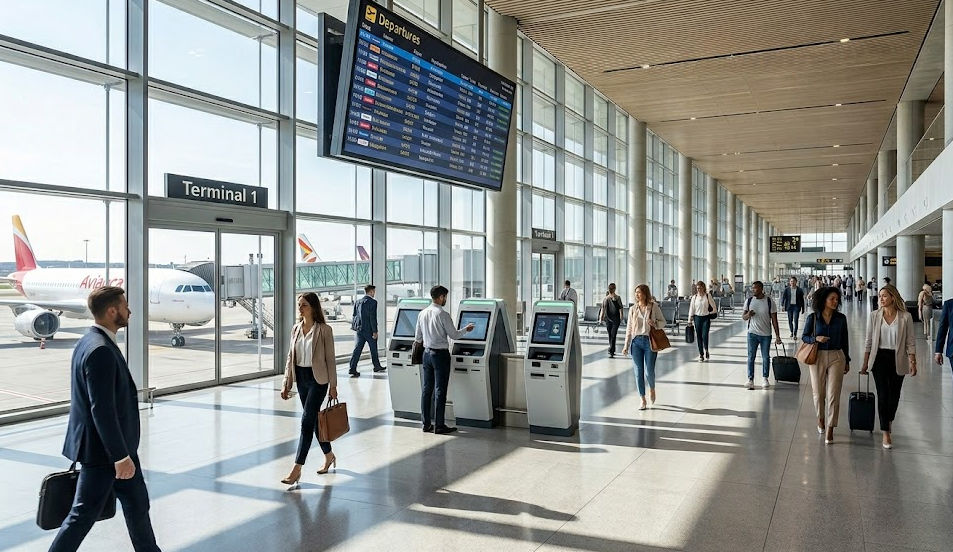
Key Features of a Modern Terminal 1
For a Terminal 1 to be competitive in the age of artificial intelligence and automation, it must meet cutting-edge technological standards.
Architectural Design and Passenger Flow
The design of a Terminal 1 seeks to minimize connection times. Efficiency is measured by the distance a passenger must travel from check-in to the boarding gate. An optimized flow reduces traveler stress and improves the commercial services within the terminal.
Technology and Digitalization
Today, talking about Terminal 1 is talking about:
- Biometrics: Facial recognition to speed up boarding.
- Automated Baggage Systems (BHS): Reducing errors in suitcase sorting.
- AI and Data Analysis: Real-time optimization of security queues.
How to Optimize Your Experience When Traveling Through Terminal 1
Navigating a massive terminal can be overwhelming. Here are practical tips to make your transition flawless:
1. Verify Your Airline in Advance
Even if Terminal 1 is the main one, many low-cost or regional airlines operate from secondary terminals. Check your boarding pass before heading to the airport.
2. Recommended Arrival Time
For international flights from Terminal 1, it is ideal to arrive 3 hours in advance. The magnitude of these facilities means that security and migration checks can take longer than expected.
3. Use of Mobile Applications
Download the airport app. Many already integrate interactive maps that guide you step-by-step to your boarding gate, even showing you where to find the nearest coffee.
Impact of Artificial Intelligence on Terminal Management
The integration of tools like Gemini and advanced language models is revolutionizing how we interact with infrastructure.
Virtual Assistants and AI Mode
Passengers can now check flight status or service locations in real-time using advanced chatbots. These systems use AI Mode to predict delays based on weather or air traffic, offering solutions before the passenger even detects the problem.
Logistics Optimization via ChatGPT
Logistics companies operating in Terminal 1 use ChatGPT-style models to draft incident reports, manage warehouse inventory, and optimize the routes of ground service vehicles.
Frequently Asked Questions (FAQ)
What is the difference between Terminal 1 and Terminal 2?
Generally, Terminal 1 is intended for international flights and full-service carriers, while Terminal 2 often houses regional or low-cost carriers.
How do I move from Terminal 1 to other terminals?
Most large airports have free internal transport systems, such as automated people movers (monorails), shuttle buses, or rapid connection walkways.
Are there rest services in Terminal 1?
Yes, almost all international-level Terminal 1s have VIP Lounges, transit hotels, or "sleep pods" for passengers with long layovers.
Can I exchange currency in Terminal 1?
Absolutely. Being the main terminal, you will find multiple currency exchange offices and ATMs distributed in both the departures and arrivals areas.
Conclusion: The Future of Terminal 1
Terminal 1 will continue to be the fundamental pillar of global transport. Its evolution does not stop at physical infrastructure; it expands into the digital realm. With the implementation of Google AI, Gemini, and other disruptive technologies, the user experience will become increasingly personalized, secure, and fast.
If you are traveling soon, make sure to know the specific details of the Terminal 1 at your destination. Preparation is the key to transforming a simple transit into a pleasant and efficient experience.